
Introduction: Why Nuclear Is Back on the Global Agenda
After decades of stagnation following high-profile accidents and rising public skepticism, nuclear energy is experiencing a strategic revival. This renewed interest—often described as the nuclear renaissance—is not centered on traditional gigawatt-scale reactors, but on Small Modular Reactors (SMRs). Governments, utilities, and industrial consumers are increasingly viewing SMRs as a pragmatic solution to energy security, decarbonization, and grid resilience challenges.
As geopolitical tensions, volatile fossil fuel markets, and climate commitments converge, energy sovereignty has become a national priority. SMRs, with their modular construction, flexible deployment, and lower upfront capital requirements, are emerging as a cornerstone technology in the global competition to secure reliable, low-carbon power.
Understanding Small Modular Reactors (SMRs)
What Are SMRs?
Small Modular Reactors are nuclear fission reactors typically producing up to 300 megawatts (MW) of electrical power per unit—roughly one-third or less of the output of conventional nuclear plants. Their defining characteristics include factory-based manufacturing, standardized designs, and modular scalability.
Unlike large reactors that require extensive on-site construction over a decade or more, SMRs are designed to be assembled off-site and deployed more rapidly, reducing construction risk and cost overruns.
Key Technical Advantages of SMRs
SMRs introduce several innovations that address long-standing criticisms of nuclear power:
- Enhanced safety: Many SMR designs rely on passive safety systems that function without human intervention or external power.
- Lower capital intensity: Smaller unit size reduces initial investment barriers.
- Flexible siting: SMRs can be deployed in remote regions, industrial hubs, or former coal plant sites.
- Load-following capability: They can better complement intermittent renewable energy sources.
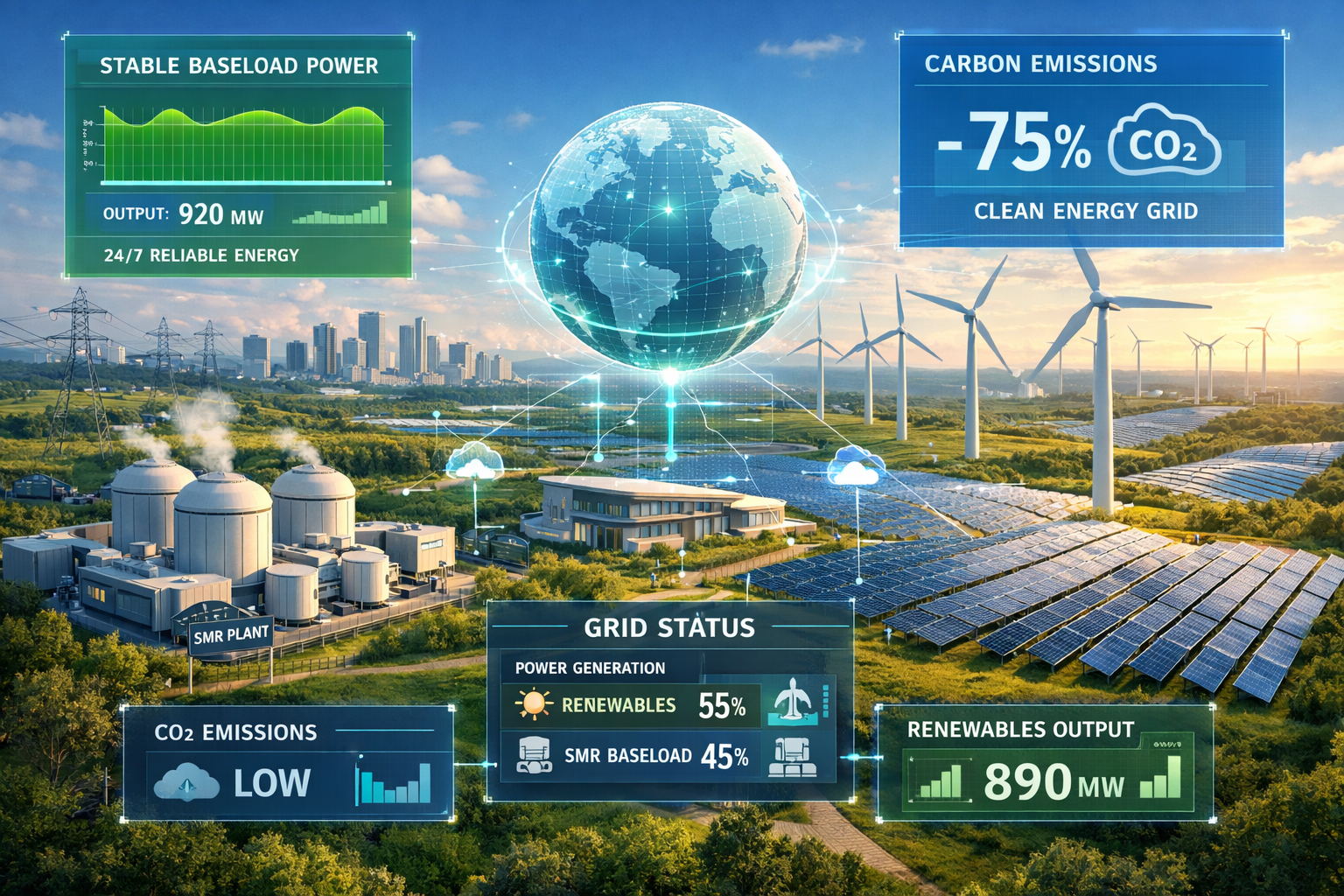
These features position SMRs as both a baseload and balancing resource in modern energy systems.
The Strategic Drivers Behind the Nuclear Renaissance
Energy Security and Geopolitical Risk
Energy has re-emerged as a tool of geopolitical leverage. Disruptions in gas supply chains, sanctions regimes, and regional conflicts have exposed the vulnerabilities of energy import dependence. For many countries, SMRs offer a pathway to domestic, dispatchable power generation that is less exposed to external shocks.
Nuclear fuel supply chains, while global, are more diversified and predictable than oil or gas markets. Moreover, advanced fuel cycles and long refueling intervals enhance operational autonomy.
Decarbonization and Climate Policy Alignment
Nuclear power remains one of the few scalable, low-carbon energy sources capable of providing continuous electricity. As governments pursue net-zero targets, SMRs are increasingly framed as a complement—not a competitor—to renewables.
In sectors where electrification is difficult, such as steel, chemicals, and hydrogen production, SMRs offer process heat and high-capacity power with minimal emissions.
Grid Modernization and Industrial Demand
Digital infrastructure, artificial intelligence, and advanced manufacturing are driving exponential growth in electricity demand. Data centers, in particular, require stable, high-density power.
SMRs can be co-located with industrial facilities or data centers, enabling behind-the-meter power generation and reducing strain on national grids.
The Global Race for SMR Leadership
United States: Innovation and Private Capital
The United States is positioning itself as a leader in SMR technology through a combination of public funding and private-sector innovation. Companies such as NuScale Power, TerraPower, and GE Hitachi are advancing distinct reactor designs, ranging from light-water SMRs to sodium-cooled fast reactors.
Federal support via the Department of Energy, coupled with regulatory engagement from the Nuclear Regulatory Commission, has accelerated licensing pathways. The U.S. strategy emphasizes export potential and technological standard-setting.
Europe: Energy Sovereignty and Industrial Policy
Europe’s SMR push is closely tied to energy independence objectives. France, leveraging its nuclear expertise, is developing the NUWARD SMR as part of a broader industrial policy to sustain its nuclear supply chain.
The United Kingdom is backing Rolls-Royce SMRs, viewing them as a means to replace aging reactors and reinforce domestic manufacturing. Eastern European countries, seeking alternatives to Russian energy imports, are actively evaluating SMR deployments.
China and Russia: State-Driven Deployment
China and Russia maintain an advantage in state-coordinated nuclear development. Russia’s Rosatom has already deployed floating SMRs and continues to market turnkey nuclear solutions globally.
China, meanwhile, is rapidly advancing indigenous SMR designs and integrating them into its long-term energy planning. These efforts are supported by centralized financing and streamlined regulatory processes.
Emerging Markets: Leapfrogging with Modular Nuclear
For emerging economies, SMRs present an opportunity to leapfrog traditional energy infrastructure. Countries in Southeast Asia, the Middle East, and Africa are assessing SMRs as a means to meet rising demand without increasing carbon intensity.
International partnerships and vendor financing models will be critical in determining adoption trajectories in these regions.
SMRs and Energy Sovereignty
Reducing Import Dependence
Energy sovereignty is fundamentally about control—over supply, pricing, and strategic decision-making. By enabling domestic generation with predictable operating costs, SMRs reduce exposure to imported fossil fuels.
For island nations or landlocked states, SMRs offer a compact and reliable alternative to large-scale fuel imports.
National Security and Critical Infrastructure
Reliable electricity underpins national security. Military bases, hospitals, and digital infrastructure require uninterrupted power. SMRs can be configured as hardened, secure assets supporting critical operations.
Some governments are exploring SMRs as part of resilience planning for extreme weather and cyber-physical threats.
Economic Spillovers and Industrial Capability
Developing an SMR ecosystem extends beyond power generation. It involves fuel fabrication, engineering services, digital control systems, and long-term maintenance.
Countries that establish domestic SMR supply chains can capture high-value industrial activity and export expertise, reinforcing economic sovereignty.
Regulatory, Financial, and Social Challenges
Licensing and Standardization
Despite their promise, SMRs still face regulatory uncertainty. Nuclear licensing frameworks were designed for large reactors and often lack provisions for modular deployment.
International harmonization of standards could significantly reduce costs and accelerate adoption, but progress remains uneven.
Financing and Cost Competitiveness
While SMRs lower upfront costs relative to large reactors, they must compete with increasingly cheap renewables. Achieving cost parity depends on serial production and deployment at scale.
Government-backed financing, contracts for difference, and long-term power purchase agreements are likely to play a decisive role.
Public Perception and Waste Management
Public acceptance remains a critical variable. Although SMRs improve safety profiles, concerns about nuclear waste and accident risk persist.
Transparent communication, community engagement, and credible waste disposal strategies will be essential to sustaining political support.
The Future Outlook: From Pilot Projects to Systemic Impact
The next decade will determine whether SMRs transition from demonstration projects to a mainstream energy solution. Early deployments will shape cost curves, regulatory norms, and investor confidence.
If successful, SMRs could redefine nuclear power as a flexible, distributed asset rather than a centralized megaproject. This shift would align nuclear energy more closely with the decentralized architecture of modern power systems.
Conclusion: SMRs as a Pillar of the New Energy Order
The nuclear renaissance is less about reviving the past and more about reengineering nuclear power for contemporary realities. Small Modular Reactors sit at the intersection of energy security, climate policy, and industrial strategy.
As the global race intensifies, SMRs are becoming a symbol of energy sovereignty—offering nations greater control over their energy futures while supporting decarbonization goals. The countries that succeed in deploying SMRs at scale will not only secure reliable power, but also shape the geopolitical and economic contours of the next energy era.