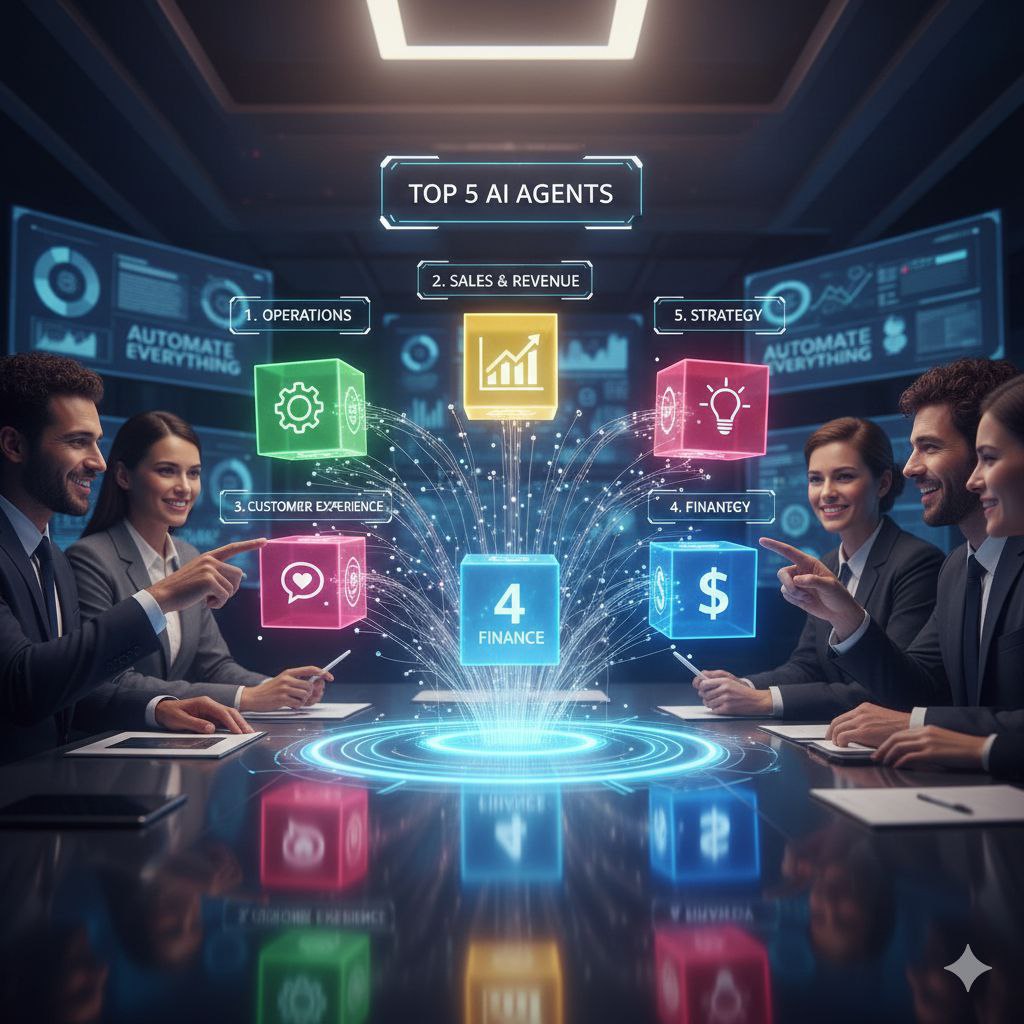

In 2024, we used AI to write. In 2025, we used it to brainstorm. But as we step into 2026, the trend has shifted from “Chatting” to “Doing.” While ChatGPT remains a powerful tool, forward-thinking businesses are moving toward Autonomous AI Agents—systems that don’t just provide answers but actually execute complex workflows from start to finish.
1. Devin AI: The Autonomous Software Engineer
Devin is no longer just a coding assistant; it is a fully autonomous software engineer. Unlike traditional AI that suggests code snippets, Devin can plan projects, write the code, debug errors, and deploy the final application independently.
- Business Impact: Startups can now build and scale software products with minimal engineering overhead.
- Why it’s a 2026 Must-Have: It reduces development time by nearly 60%, allowing founders to focus on strategy rather than technical bugs.
2. MultiOn: The Web Browser Agent
MultiOn is the “motor cortex” for AI. It can navigate the live web just like a human. You can command it to “find the cheapest flight, book the hotel, and send the itinerary to my calendar,” and it will perform every click and form-fill required.
- Business Impact: Automates repetitive online tasks like market research, competitor price monitoring, and administrative booking.
- Why it’s a 2026 Must-Have: It bridges the gap between AI models and real-world web actions, making it an essential digital assistant.
3. Artisan: End-to-End Revenue Growth
Artisan is leading the 2026 wave of AI sales agents. It doesn’t just find leads; it researches them, crafts hyper-personalized outbound messages, and manages the entire SDR (Sales Development Representative) workflow.
- Business Impact: Sales teams can automate 80% of their prospecting, allowing humans to focus solely on closing deals.
- Why it’s a 2026 Must-Have: In a high-competition market, the speed and personalization offered by AI agents like Artisan are the only way to scale outbound revenue.
4. Microsoft AutoGen: The Multi-Agent Orchestrator
Microsoft AutoGen is a framework that allows multiple AI agents to talk to each other to solve a single problem. Imagine a “Marketing Agent” debating with a “Finance Agent” to determine the best ad spend for your next campaign.
- Business Impact: It creates a “Virtual Department” where different AI agents collaborate without human intervention.
- Why it’s a 2026 Must-Have: It allows businesses to solve complex, multi-step problems that are too big for a single AI like ChatGPT to handle.
5. HyperWrite: The Personal Executive Agent
HyperWrite has evolved from a simple writing tool into a proactive executive assistant. It monitors your apps, understands patterns in your emails, and automates your entire communication workflow based on your specific “Personal Persona”.
- Business Impact: Saves an average of 10-20 hours per week for executives by handling scheduling, drafting, and research.
- Why it’s a 2026 Must-Have: Its ability to learn your
Recommended for You:
The Hard Truth: Why Emotional Intelligence is Your Only Safety Net in 2026
Discover why AI agents can automate tasks, but human EQ remains the ultimate job security.







1 comment