
Imagine a world where the very act of growing our food doesn’t deplete our planet, but actually heals it. Sounds like science fiction, right? Yet, here we are in 2026, witnessing a quiet revolution in agriculture: regenerative farming. It’s not just a buzzword; it’s rapidly becoming our strongest ally against the looming shadow of global food insecurity and a cornerstone of the emerging circular economy.
The Urgent Need: Why Food Insecurity Haunts 2026
Let’s be blunt: the global food system is under immense pressure. Climate change is no longer a distant threat; it’s a daily reality for farmers worldwide. Droughts, floods, and unpredictable weather patterns are hammering crop yields, making stable food supplies a constant worry. The UN estimates that hundreds of millions still face chronic food shortages, a number that’s not decreasing fast enough. Couple this with a growing global population and the finite nature of arable land, and you get a clear picture: our current food production methods are simply not sustainable for the long haul.
Traditional farming, with its heavy reliance on synthetic fertilizers and pesticides, has inadvertently created a vicious cycle. It depletes the soil’s natural fertility, making it more dependent on external inputs. This isn’t just an ecological problem; it’s an economic one for farmers and a health crisis for consumers. We’re essentially borrowing from our future, and 2026 is the year many are realizing those debts are coming due.
Understanding the Circular Economy in Agriculture
So, what exactly is the circular economy, and how does farming fit into it? Think of it as moving away from a linear “take-make-dispose” model to one where resources are kept in use for as long as possible. In agriculture, this means designing out waste and pollution, keeping products and materials in use, and regenerating natural systems.
- Linear Model: Grow food → harvest → consume → waste (depletes resources).
- Circular Model: Grow food → harvest → consume → organic waste composted → returns nutrients to soil (regenerates resources).
This isn’t just about recycling food scraps (though that’s a part of it!). It’s about a holistic approach where farms become self-sustaining ecosystems. This is where regenerative farming truly shines, acting as the engine of a circular food system.
Regenerative Farming: More Than Just “Sustainable”
While “sustainable farming” aims to maintain the status quo without further damage, regenerative farming goes a step further. It actively seeks to improve and restore degraded ecosystems. It’s about reversing the damage and building resilience. Here are its core principles, which are crucial for our global food supply in 2026:
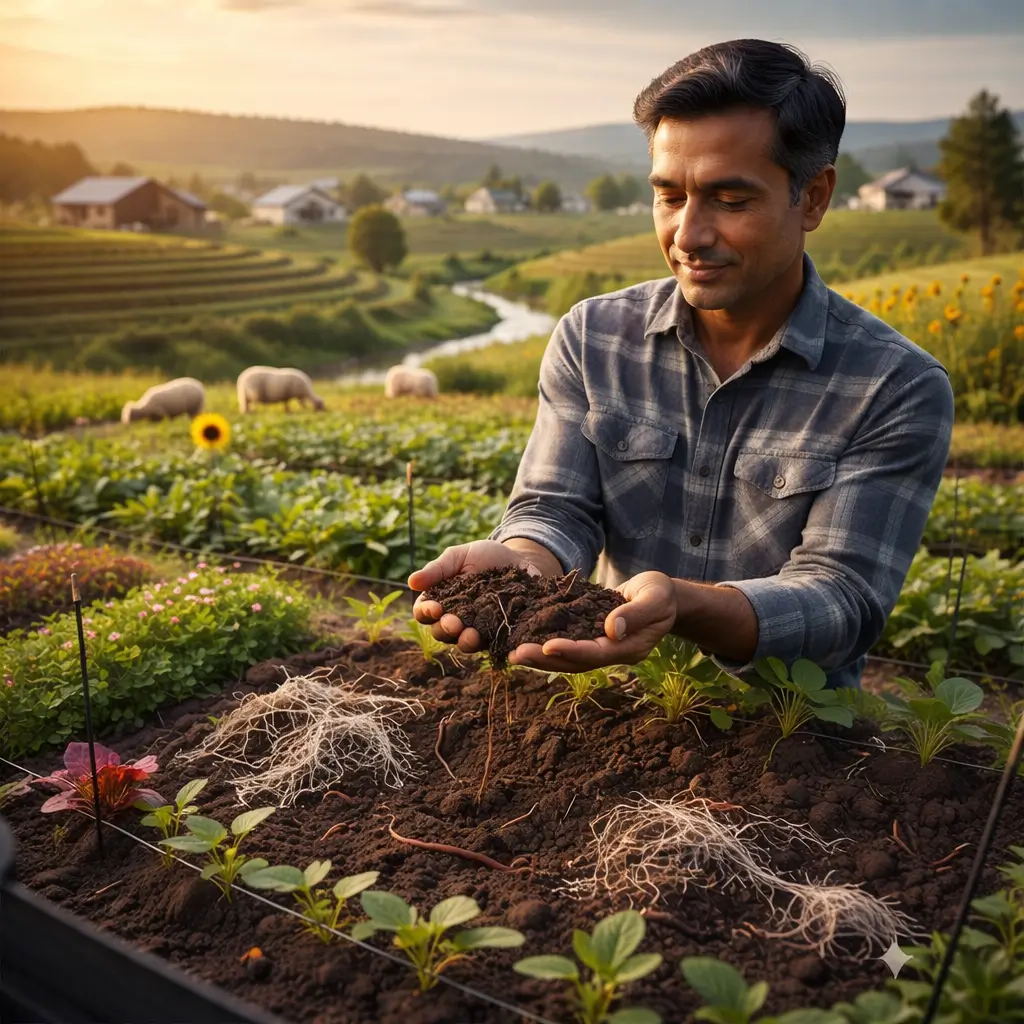
- Minimizing Soil Disturbance (No-Till/Low-Till): Plowing releases carbon from the soil and disrupts its delicate microbial life. Regenerative farmers minimize tilling, allowing soil structure to improve naturally.
- Maximizing Crop Diversity: Instead of monocultures (growing a single crop), diverse crops (polycultures) mimic natural ecosystems, improving soil health and deterring pests.
- Keeping the Soil Covered: Bare soil is vulnerable to erosion and nutrient loss. Cover crops protect the soil, add organic matter, and suppress weeds.
- Integrating Livestock: Properly managed grazing animals can mimic natural patterns, fertilizing the soil and stimulating plant growth. Think of bison on the prairies!
- Minimizing Chemical Inputs: Reducing or eliminating synthetic fertilizers and pesticides allows beneficial microbes and insects to thrive, creating a healthier ecosystem.
The Tangible Benefits: Why Regenerative Practices are Gaining Traction
The beauty of regenerative agriculture lies in its multi-faceted benefits, addressing everything from climate change to public health:
1. Boosting Soil Health and Fertility
Healthy soil is the foundation of everything. Regenerative practices increase soil organic matter, essentially turning the soil into a sponge that retains water and nutrients. This means crops are more resilient to droughts and require less irrigation, a critical factor for regions facing water scarcity. Plus, nutrient-dense soil leads to more nutrient-dense food – a win for public health!
2. Powerful Carbon Sequestration
This is where regenerative farming truly shines as a climate resilient agriculture solution. Healthy soil acts as a massive carbon sink, pulling carbon dioxide from the atmosphere and storing it. This process, known as carbon sequestration farming, has the potential to significantly offset greenhouse gas emissions, turning farms into allies in the fight against climate change.
3. Enhancing Biodiversity
By reducing chemical inputs and encouraging diverse planting, regenerative farms become havens for pollinators, beneficial insects, and wildlife. This increased biodiversity creates a more stable and resilient ecosystem, reducing the need for artificial interventions.
4. Economic Resilience for Farmers
Farmers who adopt these practices often see reduced input costs (less fertilizer, less pesticide) and more stable yields due to healthier soil. This economic resilience is vital in a volatile market, making sustainable farming practices not just an environmental choice, but a smart business one.
5. Addressing Food Insecurity Locally and Globally
By building more resilient, productive local food systems, regenerative farming helps secure food supplies, especially for vulnerable communities. It reduces reliance on complex, often fragile, global supply chains, making local economies stronger and food more accessible. This is the future of food security.
Challenges and the Road Ahead for 2026
Of course, shifting from industrial farming to widespread regenerative practices isn’t without its challenges. It requires significant investment in farmer education, new equipment, and a change in mindset. Policy support, incentives for carbon sequestration farming, and consumer demand for regeneratively grown products are all crucial for accelerating this transition. We need more research, more collaboration, and a willingness to rethink decades of agricultural norms.
However, the momentum is undeniable. Major food companies are investing in regenerative supply chains, governments are exploring new policies, and consumers are increasingly seeking out food that has been grown in a way that respects the planet. The conversation around zero waste agriculture is louder than ever.
My Take: A Hopeful Horizon
For me, the rise of regenerative farming within the circular economy framework isn’t just a technical solution; it’s a profound shift in our relationship with the Earth. It acknowledges that we are not separate from nature, but an integral part of it. As we navigate the complexities of 2026 and beyond, this approach offers a tangible, hopeful path forward.
It’s about understanding that our well-being is intrinsically linked to the health of our soil, our water, and our air. By empowering farmers to become stewards of the land, we’re not just growing food; we’re growing a more resilient, equitable, and sustainable future for everyone. And that, I believe, is worth investing in, both personally and globally. This isn’t just about farming; it’s about life.
What are your thoughts on regenerative farming and its role in our future food security? Share your insights in the comments below!