Comparing the 2026 Market Leaders
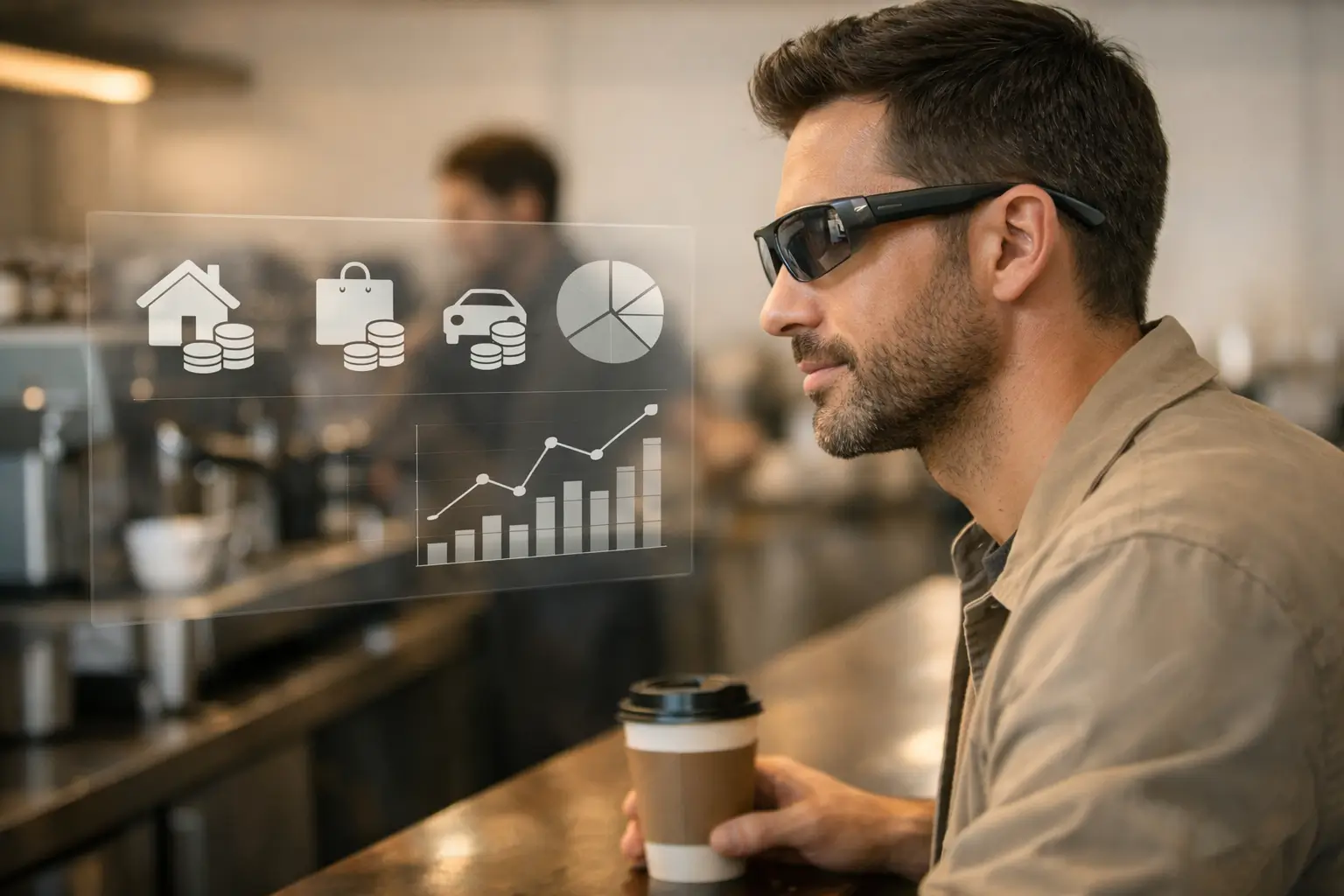
The current landscape is divided between mainstream wearable convenience and professional-grade AR utility.
| Criteria | Mainstream (e.g., Meta Ray-Ban) | Pro-AR (e.g., RayNeo X3 Pro) |
|---|---|---|
| Primary Display | Audio & Minimal Alerts | Full Binocular MicroLED |
| Finance Feature | Voice-based budget nudges | Real-time visual data overlay |
| Best Use Case | Everyday lifestyle tracking | High-density financial auditing |
The Tech Behind the Lens: MCP
What makes this work is the Model Context Protocol (MCP). This standard allows your glasses to securely bridge the gap between what you “see” and your bank’s digital ledger.
Practical Example: When you look at a café’s QR code, the AI matches a unique Visual Receipt Hash with your bank’s Transaction ID in milliseconds. It’s an instant, secure handshake that ensures your accounting is audit-ready at all times.
Current Limitations: The Reality Check
Despite the “cool factor,” 2026 tech still faces hurdles. Battery life remains a primary bottleneck; most high-functioning glasses only offer 4-6 hours of active AI use. Additionally, app ecosystems are still maturing, and the initial hardware cost makes this a “Premium Only” experience for now.
Your 2026 Financial Roadmap
How to Adapt Today:
- Choose Local-First AI: Prioritize devices that process sensitive visual financial data on-device to ensure privacy.
- The Sunday Audit: Automation is 99% accurate. Spend 5 minutes every weekend reviewing AI logs to ensure your spending aligns with your long-term wealth goals.
- Strategic Thinking: Use the time saved on data entry to analyze your “Spending Velocity” and pivot your investments accordingly.
 Deep Dive: OpenAI Prism: An Analytical View on GPT-5.2’s Workspace for Finance






1 comment