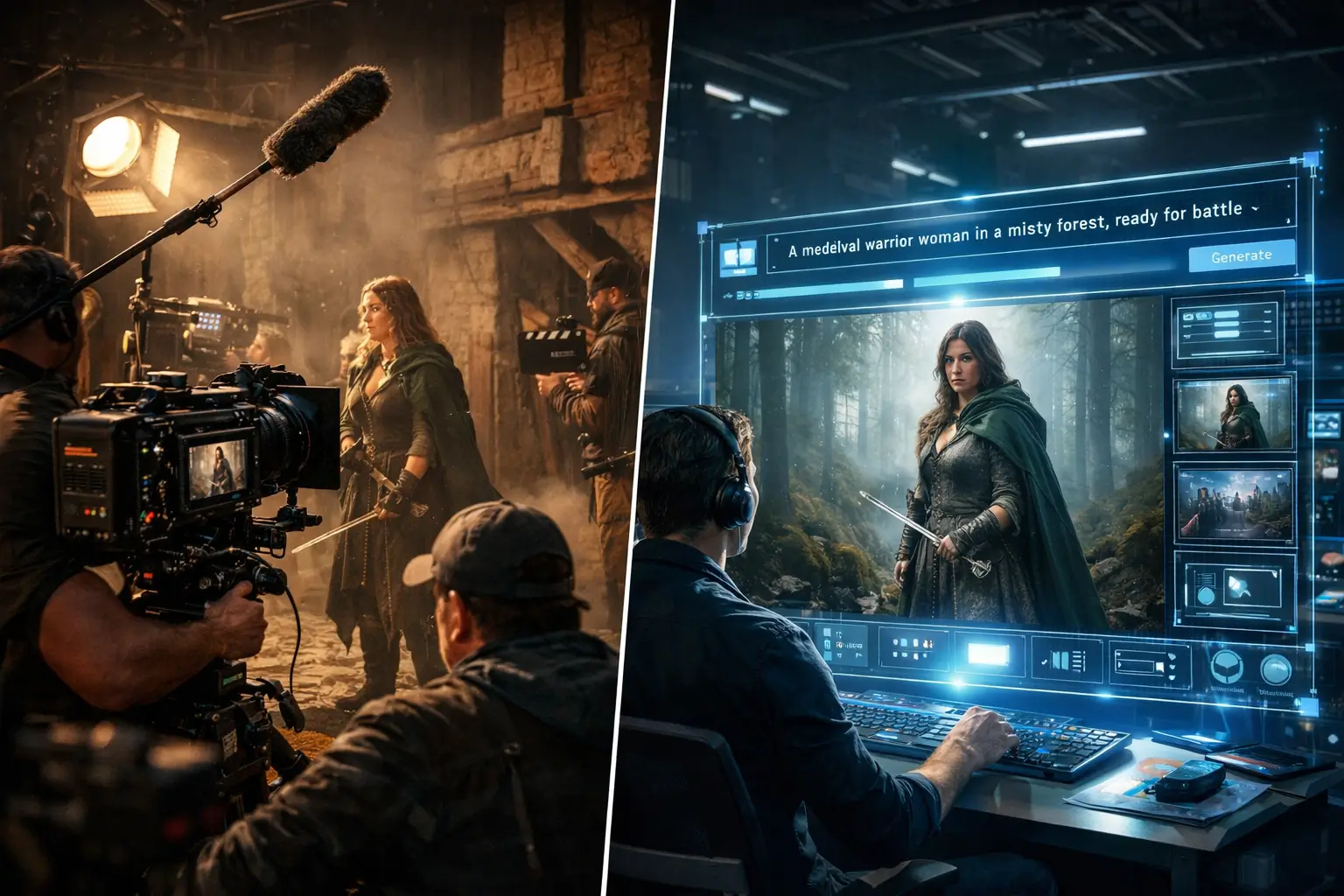

From Tech Demo to Professional Utility
In the early days of generative video, the results were often dreamlike and inconsistent. However, by 2026, observers of generative video technology note that the industry has moved into a “Utility Era.” The focus is no longer on the novelty of AI, but on its ability to integrate into professional pipelines, solving real-world production bottlenecks.
The Concrete Impact: Saving Time and Reducing Costs
The latest generation of Sora has introduced measurable shifts in how media is produced. For creators and production houses, the impact can be summarized in three key areas:
- Drastic Time Savings: Traditional pre-visualization for a 60-second high-fidelity scene used to take weeks of 3D modeling. With Sora, this timeline has been reduced from weeks to mere hours.
- Cost Reduction: By eliminating the need for physical prototypes and expensive location scouting during the concept phase, small agencies report a 60% to 80% reduction in initial production overhead.
- Infinite Scalability: Marketing teams can now generate hundreds of localized video variations simultaneously, a task that was previously physically and financially impossible for most brands.
How Sora is Redefining Film and Marketing Workflows
The most significant change is happening in the “Pre-viz” (Pre-visualization) stage. Filmmakers are using Sora to create “living storyboards” that are indistinguishable from final cuts. This allows directors to test camera angles, lighting, and pacing before a single real camera is even rented.
In the marketing sector, the ability to iterate is unparalleled. If a campaign concept isn’t performing well, a new visual direction can be rendered and deployed in a single afternoon, making digital advertising more agile than ever before.
Trust, E-E-A-T, and the Human Element
As Sora becomes a standard tool, Google’s E-E-A-T (Experience, Expertise, Authoritativeness, and Trustworthiness) standards become the primary differentiator for publishers. While AI can generate the pixels, it cannot provide the expert editorial oversight or the unique human experience that gives content its value.
Maintaining authority in 2026 means being transparent about AI usage. Providing unique insights, human case studies, and critical analysis of AI outputs is how creators will stay relevant and rank higher in search results. The goal is to use AI as a co-pilot, not an autopilot.
Ethics and Digital Integrity
With great speed comes the responsibility of digital integrity. A common industry view is that the adoption of C2PA metadata—a digital “nutrition label” for content—is fundamental to preserving trust. By 2026, most major platforms have made these invisible watermarks mandatory to distinguish between captured reality and synthetic media.
Conclusion: A Competitive Requirement
The era of AI-driven video is here, and it is moving fast. For creators and businesses, understanding and adopting tools like Sora is no longer an optional experiment—it is a competitive requirement in a high-speed digital economy. Those who master the blend of AI efficiency and human creativity will define the next decade of media.
🛠 Deep Dive: How to Build a Custom GPT for Your Small Business Without Writing Code (2026 Guide)








1 comment