

1. Why Gemini? The Infrastructure Reality Check
Let’s be real: OpenAI changed the world with ChatGPT, but when it comes to serving 1.5 billion active iPhone users simultaneously, “cool” isn’t enough. You need raw, unadulterated computing power. This is where Google won the race.
Insiders suggest that OpenAI struggled to guarantee the latency levels Apple demanded for Siri’s 2026 “Agentic” upgrade. When you ask Siri to “book a flight and find a hotel that matches my past preferences,” you can’t wait five seconds for a spinning wheel. Google’s global network of TPU (Tensor Processing Units) clusters provided a level of stability that OpenAI’s current partnership with Microsoft couldn’t quite match for the sheer volume of mobile requests.
2. The Privacy Paradox: The Apple-Google Paradox
For years, Apple has marketed itself as the anti-Google—the company that protects your data while the other harvests it. So, how do they justify this move?
The 2026 partnership introduces “Private Cloud Compute 2.0.” Apple isn’t just sending your data to Google’s servers. They’ve essentially built a “secure tunnel” where Gemini’s models run on Apple’s terms. It’s a brilliant tactical move: Apple gets the world’s most advanced reasoning engine (Gemini 1.5 Ultra), and Google gets to remain the invisible brain of the iPhone. OpenAI, which was seen as a “plug-in” rather than a partner, simply didn’t fit this long-term architectural vision.
3. The “X” Factor: Elon Musk and the Critics
Not everyone is celebrating. Elon Musk, ever the vocal critic of his rivals, took to X (formerly Twitter) to call the deal an “unholy alliance.” Musk argued that concentrating AI power between the two companies that already control the mobile OS market (iOS and Android) is a disaster for competition.
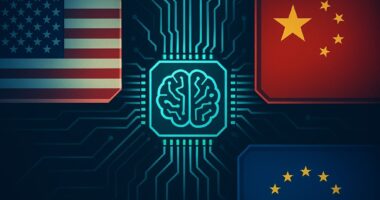
While Musk’s comments might seem like typical billionaire banter, he raises a valid point about the AI Monopoly. By choosing Google, Apple has effectively created a duopoly in personal AI assistants. If you want a top-tier AI experience in 2026, you either use Google’s ecosystem or Apple’s—and now, they are increasingly the same thing.
4. Siri 2.0: What Users Will Actually See
So, what does this actually change for the person holding an iPhone 17 or 18? For the first time, Siri is becoming an “AI Agent” rather than just a voice command system.
- On-Device Intelligence: Basic tasks stay on your phone, powered by Apple’s A19/A20 chips.
- Gemini Integration: For complex reasoning—like summarizing a 50-page PDF or generating a travel itinerary based on your emails—Siri seamlessly hands the task to Gemini.
- Cross-App Action: Because Google has the world’s best mapping and data indexing, Siri can now “see” across your apps with terrifying accuracy.
5. The Financial Ripple: A $1 Billion Bet
The markets reacted sharply to this news. Google’s stock (Alphabet) hit an all-time high, nearing a $4 trillion valuation. For Google, this isn’t just about the licensing fee Apple is paying; it’s about the data. Even with privacy safeguards, being the “brain” of the iPhone allows Google to refine its models based on the most valuable demographic in the world: the premium smartphone user.
Conclusion: A New Era of Personal Computing
Apple choosing Google Gemini over OpenAI is the final nail in the coffin for the “AI Hype” era. We are now in the “AI Utility” era. Apple didn’t want the trendiest partner; they wanted the most reliable one.
For OpenAI, this is a wake-up call. Being the first to market is great, but being the one who can sustain a global ecosystem is better. As we head into the rest of 2026, the question is no longer “What can AI do?” but rather “Who owns the AI you use every day?” For iPhone users, the answer is now a complicated, powerful blend of Apple’s hardware and Google’s mind.
Disclaimer: This analysis is based on industry reports and supply chain leaks as of January 13, 2026. Official partnership details are subject to change following Apple’s WWDC 2026 announcements.





1 comment