If you feel like 5G only just arrived, you aren’t alone. Most of us are still getting used to the lightning-fast downloads and seamless streaming that 5G brought to our smartphones. But in the world of telecommunications, the future waits for no one. Right now, as of March 2026, the blueprint for the next giant leap is already being drawn. We are talking about 6G technology—a revolution that promises to lead us into a world where the digital and physical worlds blend seamlessly.
But what does 6G actually mean for you and me? Is it just “5G but faster”? Not quite. While speed is a core factor, the future of 6G is about intelligence, immersion, and instantaneity. Let’s explore how this invisible digital fabric could reshape our lives by the time we hit 2030.
1. From Video Calls to Holographic Teleportation
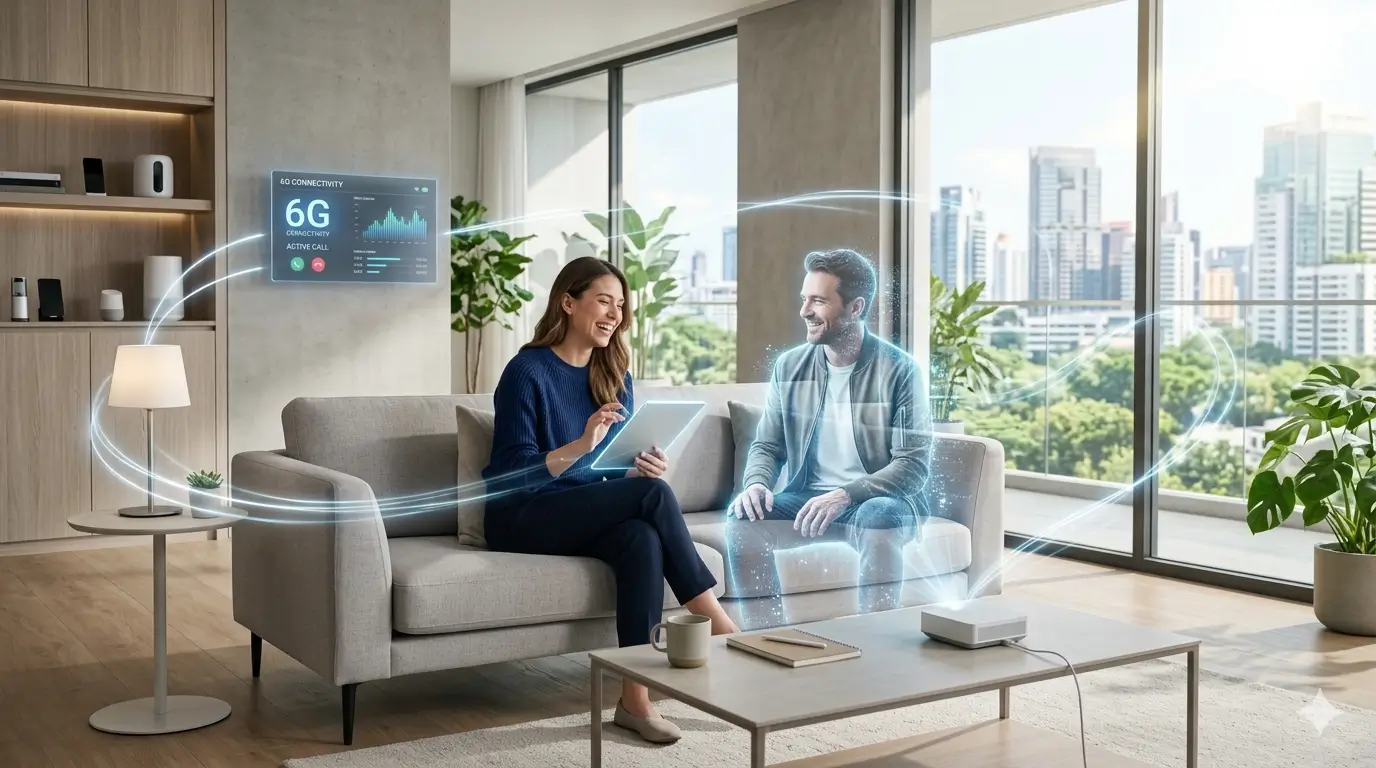
Remember when a grainy Skype call felt like magic? Today, Zoom and FaceTime are part of our daily lives. However, they still keep us focused on a flat piece of glass. The 6G network is set to evolve beyond that. Researchers are aiming for theoretical speeds of up to 1 terabit per second, which would make high-fidelity holographic communication a reality.
Imagine sitting at your kitchen table while a life-sized, 3D hologram of a colleague appears right across from you. With near-zero latency, every gesture is captured in real-time. It may become the closest thing to digital teleportation we have ever experienced, making distance truly irrelevant for the first time in history.
2. The Rise of the “Tactile Internet”
One of the most ambitious aspects of 6G is the concept of the Tactile Internet. Currently, we primarily use sight and sound to interact with digital content. 6G aims to bring the sense of touch into the digital experience. With ultra-responsive haptic sensors, you could potentially “feel” the texture of a product during an online shopping session.
This could fundamentally change fields like medicine, engineering, and remote collaboration. For instance, a specialist could guide a robotic arm in a different city while receiving physical feedback that mimics the exact resistance of the materials they are working with. It is a shift from just seeing information to physically experiencing it.
3. AI-Native Networks: The Invisible Assistant
Unlike previous generations, 6G is being designed from the ground up to be AI-native. This means the network won’t just carry data; it will intelligently anticipate your needs. The integration of 6G technology into smart cities means your environment could automatically adjust to your preferences—optimizing energy use or managing your digital workflow—without you ever needing to tap a screen.
By 2030, we may move away from being tethered to specific handheld gadgets. Instead, we will live within a connected ecosystem where AI manages the massive data flow from billions of sensors, ensuring a constant, reliable connection even in the most densely populated urban centers.
4. Digital Twins and a Seamless Reality
6G will likely enable the creation of Digital Twins on a massive scale. A digital twin is a high-fidelity virtual replica of a physical object or system. These twins are updated in real-time via 6G sensors, allowing for unprecedented monitoring and simulation. If a structural issue is detected in a city bridge, its digital twin can alert authorities before any physical danger arises.
In terms of personal wellness, future nanosensors in our bodies could potentially transmit real-time health data to our digital twins. This would allow for a proactive approach to health, identifying potential issues long before symptoms appear. This leap in data-driven insights will likely redefine the standards of modern healthcare and public safety.
5. Bridging the Digital Divide Globally
While 6G sounds like a vision for high-tech hubs, its ultimate goal includes global inclusivity. By integrating satellite networks with traditional ground-based towers, 6G aims to provide high-speed coverage to the most remote regions. Whether you are in the middle of the Sahara Desert or on a ship in the Pacific Ocean, the goal is to make “dead zones” a thing of the past.
Conclusion: A Human-Centric Future
As we look toward 2030, it’s easy to get lost in the technical jargon of terahertz waves. But at its core, the future of 6G networks is about enhancing human connection. It is about removing the barriers of distance to bring us closer together in ways we have only recently begun to imagine.
The journey to 6G is not just a technical upgrade; it’s a transition to an era where technology serves humanity more naturally and intuitively. By the end of this decade, 6G may not just connect our devices—it could redefine what it means to be connected as humans.
🛠 Deep Dive: I Tested 5 High-Yield Savings Accounts in 2026: Here’s My Honest Review