
This is not financial advice. Profitability depends on local energy costs and network conditions
I’ve spent the last decade tracking weird and wonderful gadgets, but if you had told me five years ago that my morning shower would help pay my electricity bill, I probably would have laughed. Yet, here we are in early 2026, and the “Smart Home” has evolved into something far more productive than just voice-activated lights.
1. The “Waste Not” Philosophy: How Does It Actually Work?
To understand why this is a game-changer, we have to look at the biggest byproduct of Bitcoin mining: Heat. Traditional ASIC miners are basically high-powered heaters that happen to do math. In the past, miners spent thousands of dollars on cooling systems just to blast that heat out of a window. What a waste, right?
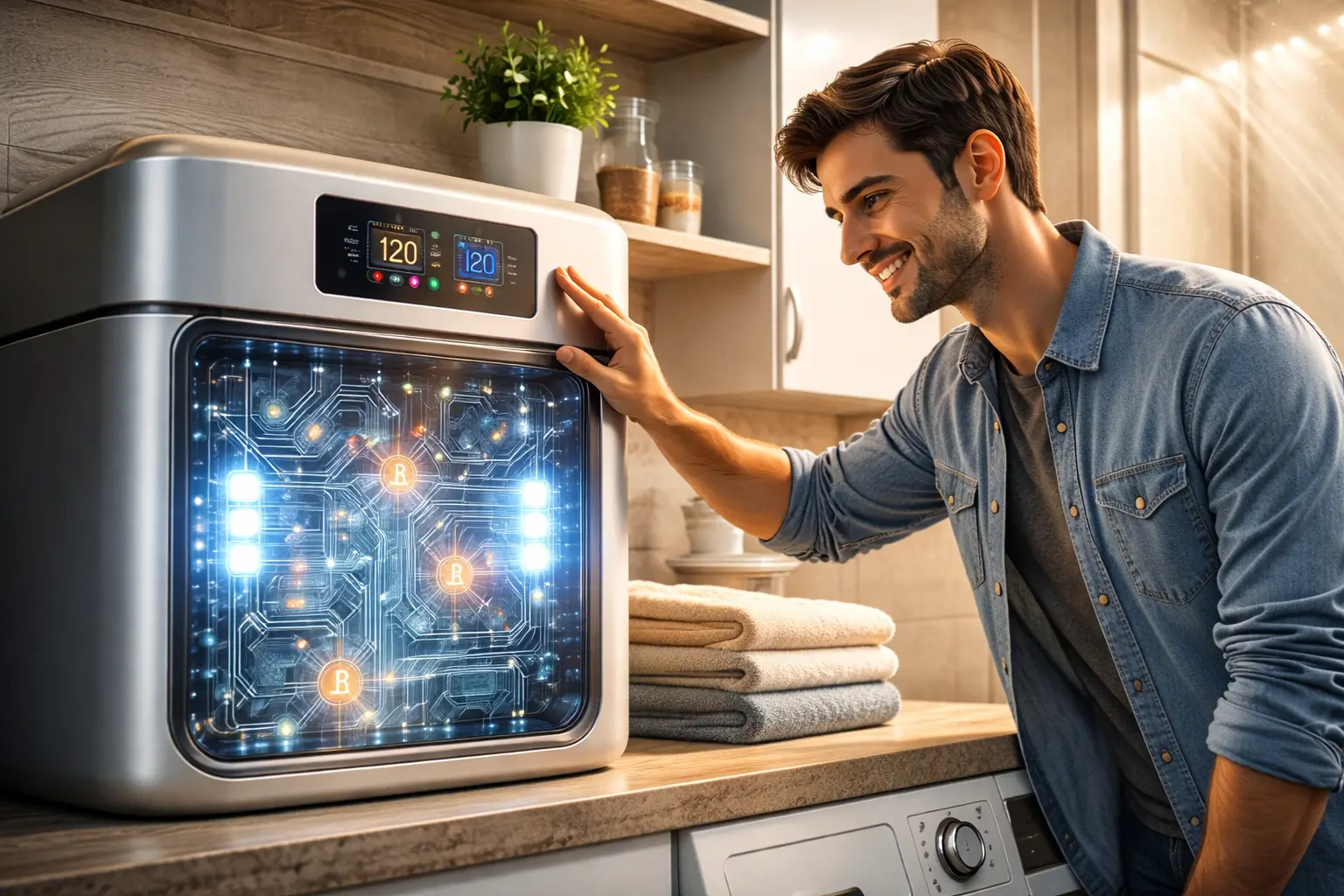
The 2026 generation of smart water heaters flips the script. Instead of using a traditional electric heating element, the tank is wrapped in a specialized Liquid-Cooled Mining Module. As the chips crunch numbers to secure the Bitcoin network, the liquid absorbs the intense heat and transfers it directly into your household water supply.
In my opinion, this is the first time Bitcoin mining has felt truly “green.” You aren’t using extra energy to heat your water; you’re simply repurposing the heat that was already being generated by the mining process. It’s a closed-loop system that turns a cost (electricity) into a dual benefit (hot water + BTC rewards).
2. Show Me the Money: Is It Really Profitable?
Let’s get real—nobody buys a smart appliance just for the novelty. You want to know if it actually helps your wallet. In 2026, with the current Bitcoin difficulty adjustments and energy-efficient chips, these units are surprisingly viable.
While you won’t become a millionaire overnight by just taking long showers, the math is compelling. A standard household unit can often generate enough BTC to cover its own electricity consumption plus a modest surplus. When you factor in the money saved on your traditional water heating bill, the ROI (Return on Investment) becomes much faster than a standard high-end appliance.
3. AI Integration: The Secret Sauce
What makes the 2026 models different from the DIY projects we saw years ago is the AI Management Layer. These heaters aren’t just “always on.” They are connected to real-time energy grids and BTC price feeds.
The internal AI knows when electricity prices are at their lowest (or when your solar panels are overproducing) and ramps up the mining intensity during those windows. It pre-heats the water when it’s most profitable to do so. It’s “set it and forget it” passive income in the truest sense. As someone who hates micromanaging my tech, this hands-off approach is exactly what the market needs.
4. The Challenges: What They Don’t Tell You on the Box
I wouldn’t be doing my job if I didn’t point out the hurdles. First, there’s the Initial Cost. These units are significantly more expensive than a regular water heater. You are paying for the plumbing plus a high-end computer.
Secondly, there is the Internet Dependency. No Wi-Fi, no mining. If your home network is spotty, your “passive income” pauses. Finally, while the noise levels have been reduced drastically thanks to liquid cooling, you can still hear a faint hum—think of it like a very quiet refrigerator. It’s something to consider if your water heater is located right next to a bedroom.
5. The Big Picture: Decentralized Energy
Beyond the individual profit, there’s a bigger story here. We are seeing a shift toward Decentralized Infrastructure. When thousands of homes start mining Bitcoin via their appliances, the network becomes more robust, and home energy use becomes more efficient.
This isn’t just about crypto; it’s about the future of Smart Cities. In a few years, we might see AI-managed heaters, dishwashers, and even clothes dryers contributing to the grid while earning their owners digital assets.
Final Verdict: Should You Buy One?
If you are already in the market for a new water heater and you have a basic understanding of digital assets, the answer is a resounding yes. It’s a functional piece of hardware that pays you back. It’s the ultimate 2026 Side Hustle because it requires zero extra hours of your time.
We are moving into an era where our homes are no longer just shelters—they are micro-economies. Your shower is no longer just a shower; it’s a node in a global financial network. And honestly? That feels like the future we were promised.
Stay warm, stay profitable.
– Ethan Cole (Financial Tech Specialist)
Related for You:
🚀 Next Read: The Smart Ring Revolution: Why 2026 is the Year We Ditch Wallets