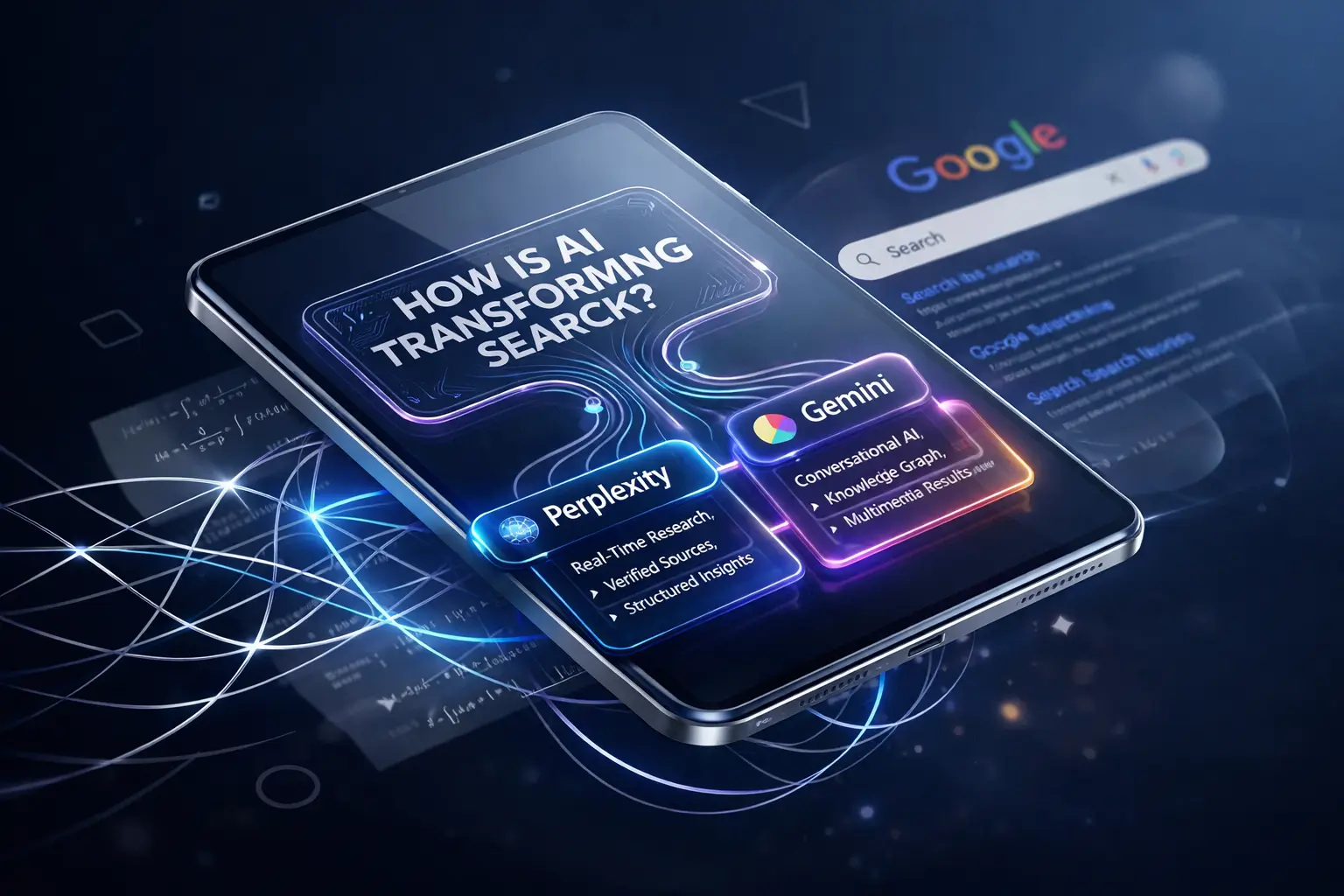
The Shift to “Answer Engines”: Understanding the Interface Evolution
For decades, search engines functioned primarily as a directory of links. In 2026, platforms like Perplexity and Google Gemini have shifted the paradigm toward “Answer Engines.” This evolution aims to remove the friction between a user’s query and the final answer. Instead of a list of websites to visit, users now receive a synthesized, verified response within the search interface itself.
For publishers at TodayPressNews.com, this shift necessitates a move away from legacy SEO tactics toward Generative Engine Optimization (GEO). The goal is no longer just to rank on page one, but to become the primary source that powers these AI-generated insights.
The Impact on Organic Traffic: Navigating the New Reality
Several industry studies conducted throughout 2025 and early 2026 suggest that organic traffic for informational queries has seen a decline of approximately 20% to 30% globally. This trend is driven by “Zero-Click” searches, where the AI provides the complete answer directly to the user.
However, while the quantity of general traffic may be decreasing, the quality of the remaining traffic is significantly higher. Users who click through from a Gemini or Perplexity citation are often seeking the deep-dive expertise that an AI summary cannot replicate. In this new era, your Expertise, Authoritativeness, and Trustworthiness (E-E-A-T) are the most valuable assets you own.
Perplexity vs. Gemini: Two Different Approaches to Discovery
Understanding how these two giants operate is key to staying visible:
- Perplexity (The Citation-First Model): Perplexity excels at real-time research. It generates a structured answer with clear, verifiable citations. To be featured here, your content must provide unique data points that the AI can easily credit.
- Google Gemini (The Ecosystem Model): Gemini leverages Google’s vast Knowledge Graph to provide conversational context. Google’s algorithms have become highly proficient at filtering out low-quality, mass-generated content in favor of human-verified reporting and original analysis.
How to Survive and Thrive: The GEO Strategy
To maintain visibility in an AI-dominated world, your content strategy must adopt the pillars of Generative Engine Optimization (GEO):
1. Information Gain and Originality
Does your article provide a new perspective, a fresh case study, or a data point that doesn’t exist elsewhere? AI models prioritize “Information Gain”—sources that add value beyond the existing consensus found in their training data.
2. Advanced Structured Data & Schema
Technical SEO remains vital. Using advanced Schema markup helps AI models identify the specific relationships between your facts, your authors, and your data points, making it easier for the engine to “trust” your content as a source.
3. Attribution-Ready Formatting
Write in clear, authoritative segments. By using concise headers to answer specific sub-questions, you make it easier for Gemini and Perplexity to extract and cite your content directly in their answers.
The Human Premium: Why Expertise Still Matters
The rise of generative AI has created a surplus of generic information. In this saturated environment, Human Experience has become a premium commodity. Readers and AI models alike are looking for:
- Personal Case Studies: Real-world applications that prove theoretical concepts.
- Nuanced Analysis: Understanding the “why” and “how” that requires professional intuition.
- Brand Authority: A consistent track record of accuracy that AI can verify through cross-referencing multiple high-authority domains.
Conclusion: The Future of Digital Discovery
The evolution of search is not a threat to quality journalism; it is a filter. By moving away from high-volume, generic content and focusing on becoming a citable authority, publishers can thrive in the age of Perplexity and Gemini. In the era of generative search, the most valuable websites are not those that chase traffic—but those that provide the information AI systems trust enough to cite.
🛠 Deep Dive: The OpenAI Sora Revolution: How Generative Video is Transforming Digital Marketing in 2026