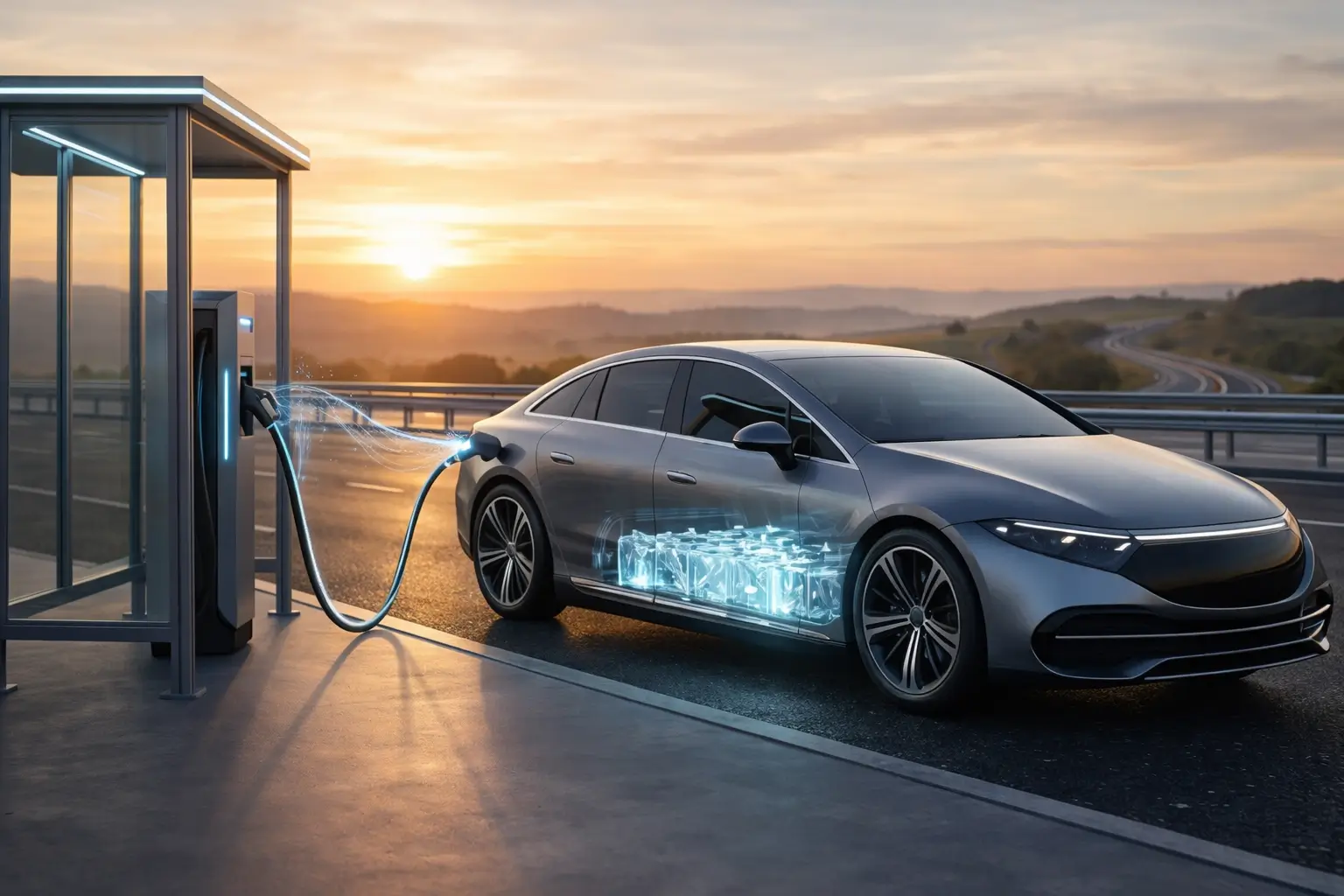
Toyota Solid-State Battery 2026: 1,200km EV Range, 10-Minute Charging
For over a decade, the electric vehicle (EV) industry has been chasing a “holy grail”: a battery that provides the range of a diesel tank and charges as fast as a coffee break. In early 2026, Toyota appears to be leading this charge. According to Toyota’s 2026 technical briefings and its strategic partner, Idemitsu Kosan, solid-state battery technology is finally moving from the laboratory to the large-scale pilot phase, potentially redefining the future of mobility.
However, while the technical promises—specifically a 1,200km (745 miles) range and a 10-minute rapid charge—are revolutionary, it is crucial to separate the engineering ambitions from the immediate industrial reality. Here is an objective look at where Toyota stands today and the hurdles that remain.
The Breakthrough: Sulfide-Based Solid Electrolytes
Unlike current lithium-ion batteries that rely on liquid electrolytes, Toyota’s 2026 roadmap introduces a sulfide-based solid electrolyte. This material allows for much faster ion movement and higher thermal stability. In laboratory conditions, these prototype cells have demonstrated energy densities of up to 500 Wh/kg—nearly double the capacity of current mainstream EVs.
Toyota aims to integrate these batteries into its 800V high-voltage platform. The company claims this could enable a 10% to 80% charge in just 10 minutes. However, achieving these speeds in the real world will depend heavily on the availability of ultra-fast charging infrastructure, which is still in its early deployment stages across Tier 1 markets such as Japan, Germany, and parts of the United States.
Competition: Toyota is Not Alone
While Toyota holds a massive portfolio of patents, the race for the next-gen battery is a global sprint. Several key players are targeting the 2026-2027 window:
- CATL (China): The world’s largest battery maker has begun scaling its all-solid-state production, targeting 2027 for small-batch integration in premium EVs.
- Samsung SDI (South Korea): Leveraging its “S-Line” pilot facility, Samsung is currently validating cells with European luxury automakers for 2027 model releases.
- QuantumScape (USA): Backed by Volkswagen, their lithium-metal cells recently cleared major durability milestones in pre-production testing.
- Nio (China): Nio has already started using 150kWh semi-solid packs as a bridge technology, offering over 1,000km range in its current battery-swap network.
The Reality Check: What Could Still Go Wrong?
Despite the “breakthrough” headlines, the industry faces significant scaling challenges that might lead to “price anxiety” for early adopters:
- Manufacturing Yields: Mass-producing solid electrolyte layers without microscopic defects (dendrites) remains an immense industrial task. Toyota’s large-scale pilot plant in Chiba is not expected to reach full commercial capacity until late 2027.
- Production Costs: Early solid-state cells are estimated to be 3 to 4 times more expensive than traditional LFP batteries. Initially, this technology will likely be restricted to luxury flagship models like the Lexus electrified series.
- Scaling the Supply Chain: Producing high-purity lithium sulfide at the “hundreds of tons” scale required for global EV production is a supply chain feat that is still being built from the ground up.
This shift could reshape global charging infrastructure and reduce dependency on oversized, heavy battery packs, making EVs more efficient than ever before. For drivers, this means fewer charging stops and a driving experience closer to traditional fuel vehicles.
Conclusion: A Revolution, Not an Overnight Switch
Toyota’s 2026 progress represents a generational leap toward making EVs practical for long-distance travel. However, it is not a “magic bullet” that will replace current tech overnight. We should expect a gradual rollout: luxury flagships in 2027-2028, followed by a trickle-down to more affordable models like the RAV4 or Prius as manufacturing costs decrease toward 2030.
Read Also: 5 Best High-Yield Savings Accounts in 2026 to Maximize Passive Income