The digital landscape has never been static. From the read-only days of Web 1.0 to the social media-driven “participation” era of Web 2.0, we are now standing on the precipice of a new transformation. As we navigate through 2026, the tech community is increasingly focused on Web 4.0—a concept that moves beyond simple decentralization toward an intelligent, symbiotic relationship between humans and machines.
For the average user, the primary concerns remain the same: Who owns my data? Is my privacy actually protected? In this deep dive, we explore how the transition to a decentralized internet might provide answers to these questions, shifting the power dynamic away from centralized entities and potentially back to the individual.
What Is Web 4.0?
While Web 3.0 laid the groundwork using blockchain and tokenization, Web 4.0 is often described by researchers as a “symbiotic web.” This phase of the internet is theorized to integrate advanced Artificial Intelligence (AI) with decentralized protocols to create a more intuitive and secure user experience.
In this framework, the internet isn’t just a place where you store files or browse content; it is an intelligent ecosystem. However, unlike the centralized AI models of the early 2020s, Web 4.0 aims to utilize “Decentralized AI,” where the intelligence is spread across a network rather than being controlled by a single corporate entity. This shift is viewed by many as a possible evolution to ensure that as the web gets smarter, it doesn’t necessarily get more invasive.
The Death of Centralized Data Silos
For decades, our digital lives have been compartmentalized into “silos” owned by Big Tech. Whether it’s your search history, financial records, or private messages, this data is often stored on centralized servers. This architecture creates significant security vulnerabilities—if the server is breached, millions of users’ private lives are exposed.
The decentralized internet proposes an alternative architecture. Instead of a single “honey pot” of data, Web 4.0 models suggest a distributed approach. In this scenario, your data doesn’t reside on a corporate server; instead, your digital footprint is referenced on decentralized networks while you control the access keys. By removing these centralized silos, the risk of mass data leaks is theoretically reduced, as there is no single point of failure for hackers to exploit.
How Data Ownership Works in Web 4.0
The concept of Data Ownership is being fundamentally redefined. In the current model, users “agree” to terms and conditions that often grant platforms broad rights to use their data. In the emerging Web 4.0 landscape, the technical shift toward Self-Sovereign Identity (SSI) is making true ownership a tangible possibility.
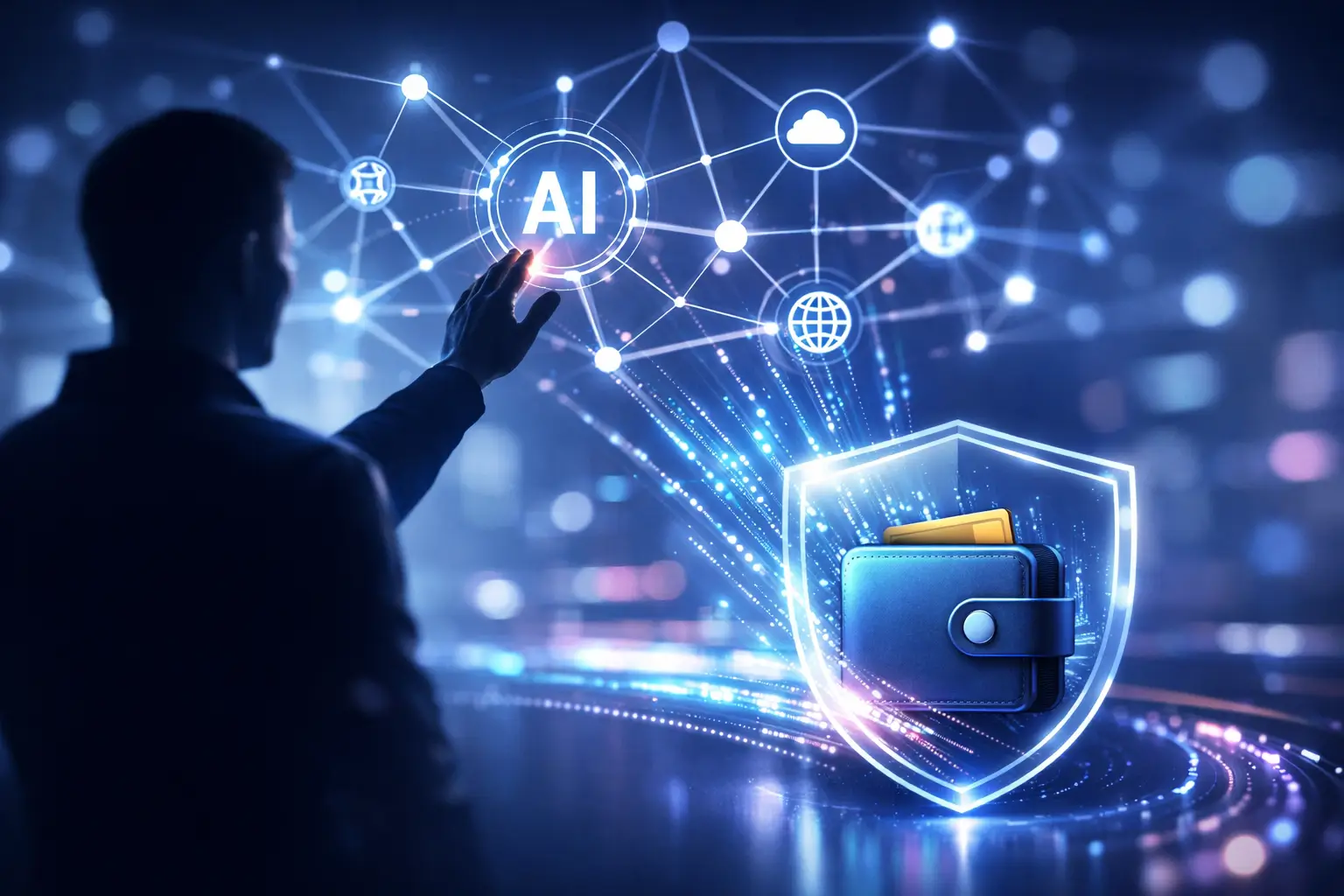
SSI allows you to hold your identity documents, credentials, and personal preferences in a digital “wallet” that you alone control. When a service needs to verify your identity, you don’t hand over your raw data; you provide a cryptographic proof. This means you are no longer a “user” in a platform’s database; you are the owner of your own digital identity, granting temporary access only when and where it is absolutely necessary.
How Web 4.0 Protects Your Privacy
Privacy in Web 4.0 is not just a policy—it is often built into the underlying code. One of the most promising technologies in this area is Zero-Knowledge Proofs (ZKP). This mathematical method allows one party to prove to another that a statement is true without revealing any information beyond the validity of the statement itself.
For example, if a website needs to verify that you are over 18, you can provide a ZKP that confirms your age without ever revealing your actual birth date or name. Furthermore, some emerging protocols in 2026 aim to enable micropayments. This could allow for a future where users receive direct incentives when their anonymized data is used for high-level research, ensuring that the value generated by data stays with the creator rather than being siphoned off by intermediaries.
The Role of AI Agents
Perhaps the most visible change in the Web 4.0 era is the rise of Personal AI Agents. These are not the chatbots of the past that send your queries to a central server. Instead, these agents are designed to operate locally or on decentralized “Edge” nodes.
Your AI agent acts as a sophisticated gatekeeper. It can browse the web, filter out intrusive advertisements, and even negotiate privacy settings with websites on your behalf. Because the agent lives within your decentralized ecosystem, it can learn your preferences without ever exposing your raw data to the cloud. This creates a highly personalized experience that remains, by design, private.
Challenges of the Decentralized Internet
Despite the potential, the road to a fully decentralized Web 4.0 is fraught with challenges. Current real-world systems often utilize a complex mix of SSI, off-chain storage, and encryption, which can be difficult for non-technical users to navigate. If you lose your private keys, for instance, there is currently no “forgot password” button in a truly decentralized world.
There are also significant concerns regarding scalability and the energy consumption of blockchain-based networks. Moreover, the lack of a global regulatory framework makes it difficult for decentralized platforms to operate across different jurisdictions. Transitioning from the convenience of Web 2.0 to the security of Web 4.0 requires a massive shift in infrastructure and user education that is still in its early stages.
Conclusion: A New Digital Freedom
Web 4.0 is often viewed as more than a technical upgrade; it reflects a broader rethink of the digital social contract. By moving away from centralized control and toward a decentralized, AI-enhanced infrastructure, we are seeing a move toward an internet that prioritizes the individual.
While the transition is complex and will take years to fully realize, the goal remains a digital world where privacy is a right, not a luxury, and where you are the rightful owner of your digital life. As we continue through 2026, the evolution toward a more secure, decentralized internet remains one of the most critical developments in modern technology.
🛠 Deep Dive: Predictive Budgeting: How Open-Source AI Transforms Expense Forecasting in 2026